Friday, 6 May 2016

Explore the Lower Windrush Valley - A circular walk to try this summer


In 2015, two new footpaths were opened by Smiths Bletchington as part of the Gill Mill quarry development: The Down Valley Way and Northern Cross Valley Way. These new paths, combined with a section of the Windrush Path and exisiting Rights of Way, create a circular route linking Ducklington, Rushy Common Nature Reserve and Hardwick.

I chose a sunny spring morning to explore the route, starting from the Car Park at Rushy Common Nature Reserve.
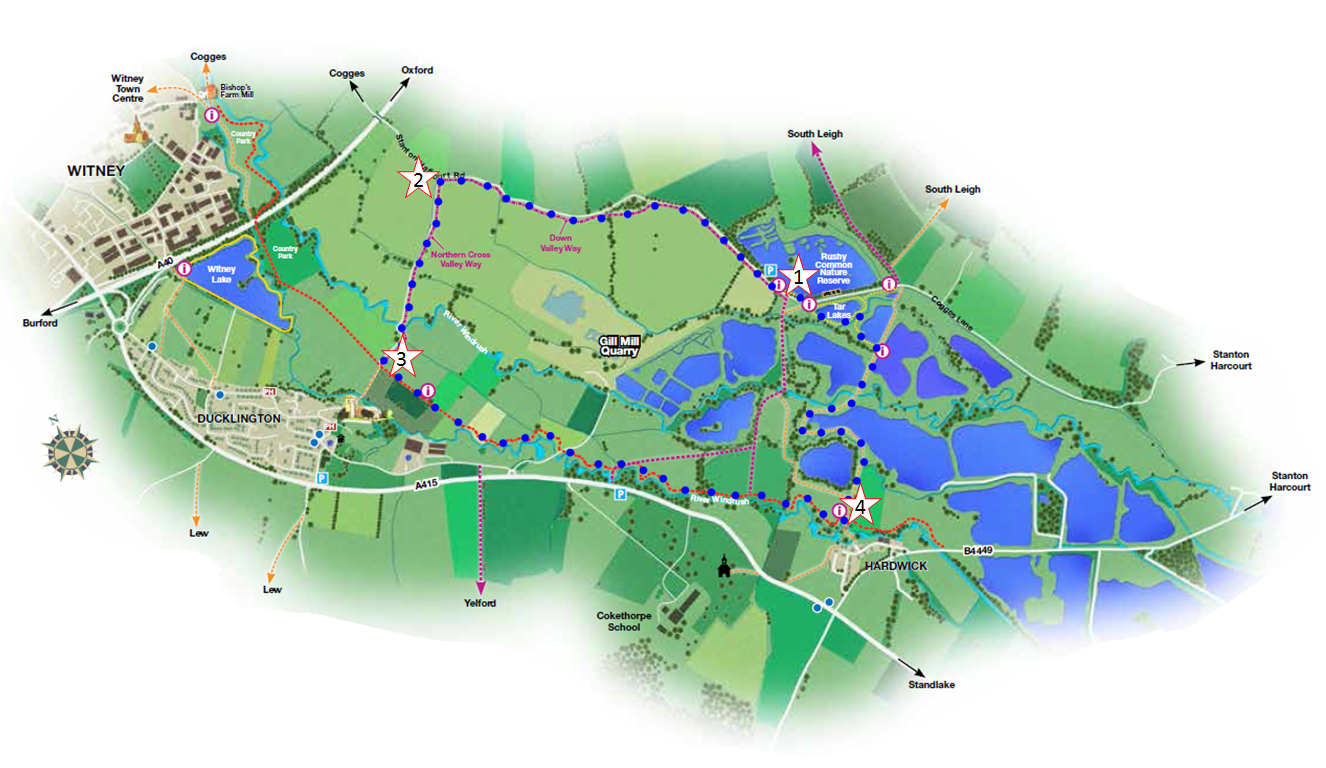

The route

Turn left out of the Rushy Common car park, walk along the road roughly 100 metres and you will find an entrance to the Down Valley Way. (Point 1 on the map)

Immediately through the gate you can see the current quarry workings on the left.
Gill Mill is one of Oxfordshire’s largest quarries. Extraction will be continuing for many years and new lakes, and sites for recreation and nature conservation will be created in the process.


Continue along the footpath…If you’re walking in Spring, keep your eyes peeled for Cowslips!


You reach a gate at the end of the footpath, turn left and you will be on the Northern Cross Valley Way. (Point 2 on the map)


Continue to walk along the Northern Cross Valley Way…

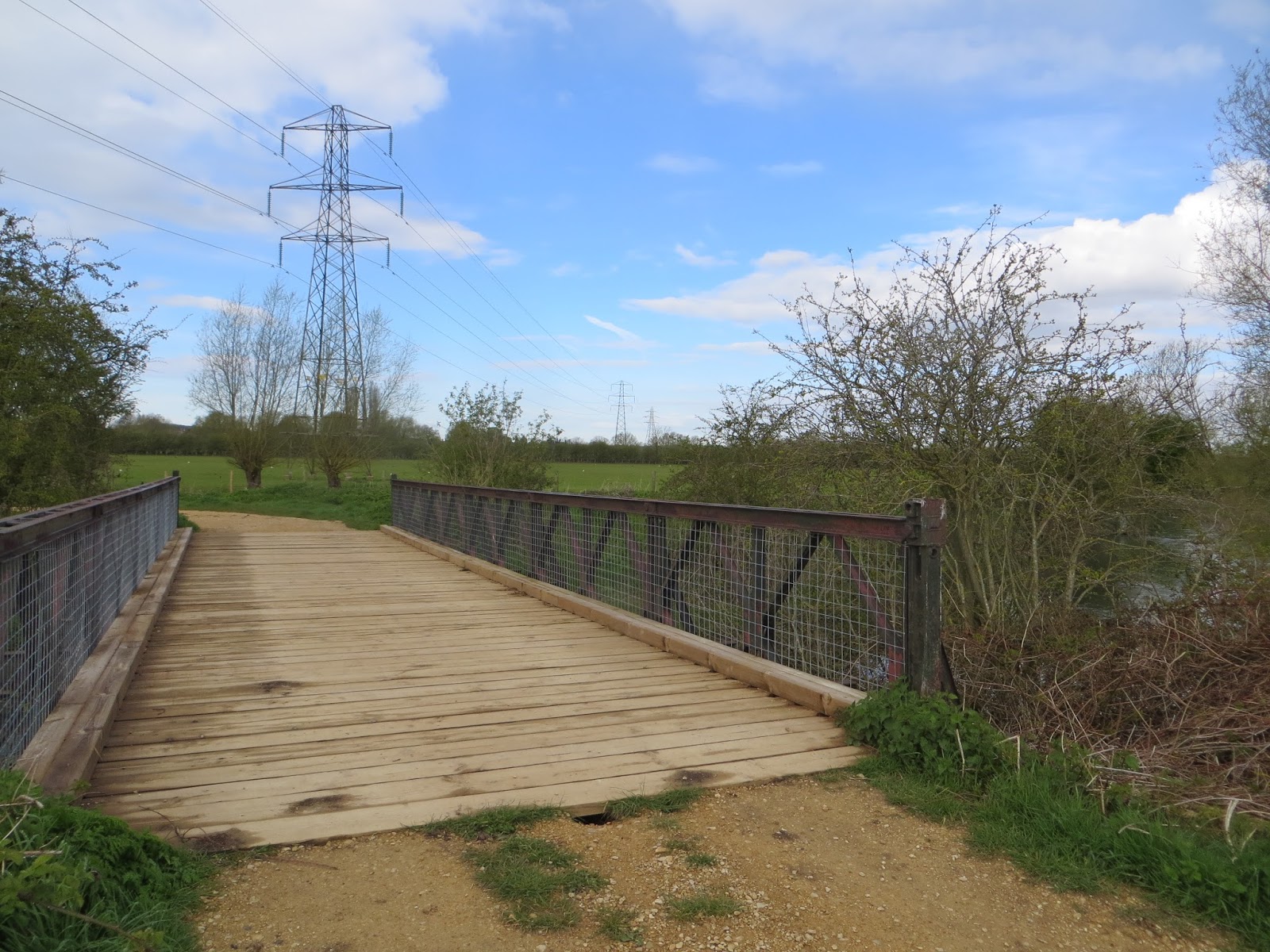
You will cross the East Arm of the River Windrush
As you near Ducklington you will reach a crossroads. Turn left and walk down the Windrush Path. (Point 3 on the map)
Follow the Windrush Path along the edges of the River Windrush…
As you approach Hardwick, there's a kissing gate. Go through the gate and take the footpath across the field. (Point 4 on the map)


You follow the footpath around Founders Lake and then Brasenose Two Lake


The path then crosses the East Arm of the River Windrush and takes you towards Tar Lakes.
Tar Lakes consists of multiple lakes and ponds created as part of the restoration work that occurred after gravel extraction.
Catch a glance of Rushy Common Nature Reserve through the viewing gaps along the footpath back to the car park.


This route is around 5 miles and you should allow 2 – 2.5 hours to complete it.

Enjoy!


Tuesday, 26 April 2016

Clean Water for Wildlife in the Lower Windrush Valley

What is Clean Water for Wildlife?
Clean Water for Wildlife is a nationwide survey set up by Freshwater Habitats Trust that aims to find wildlife rich, clean water habitats and increase understanding of the extent of nutrient pollution in freshwater habitats – streams, rivers, lakes, ponds and ditches.

Volunteers are provided with a kit that allows them to easily 'see' nutrient pollution in water. They measure the levels of nitrate and phosphate, pollutants that pose a major risk to wildlife, and will uncover the best and most unpolluted local freshwaters.

The kits are simple and quick to use making them an ideal opportunity to engage volunteers from the local community.
 

How have the Lower Windrush Valley Project been taking part?
During March and April, 18 volunteers went out and tested the Phosphate and Nitrate in over 70 ponds, lakes, streams and ditches across the Lower Windrush Valley. A further 7 sites were tested as part of visits with Stanton Harcourt Primary School and 1st Standlake Brownies.
A group from 1st Standlake Brownies testing the water at Tar Lakes
Demonstrating the use of the kit to children from Stanton Harcourt Primary School

Many of our volunteers took their children or grandchildren with them to complete the survey - a great opportunity to get children thinking about water quality and their local water bodies.

The results...

We'll be providing a summary of all of the data our volunteers have collected so watch this space...


Monday, 18 April 2016

The sunshine was out for Fritillary Sunday in Ducklington

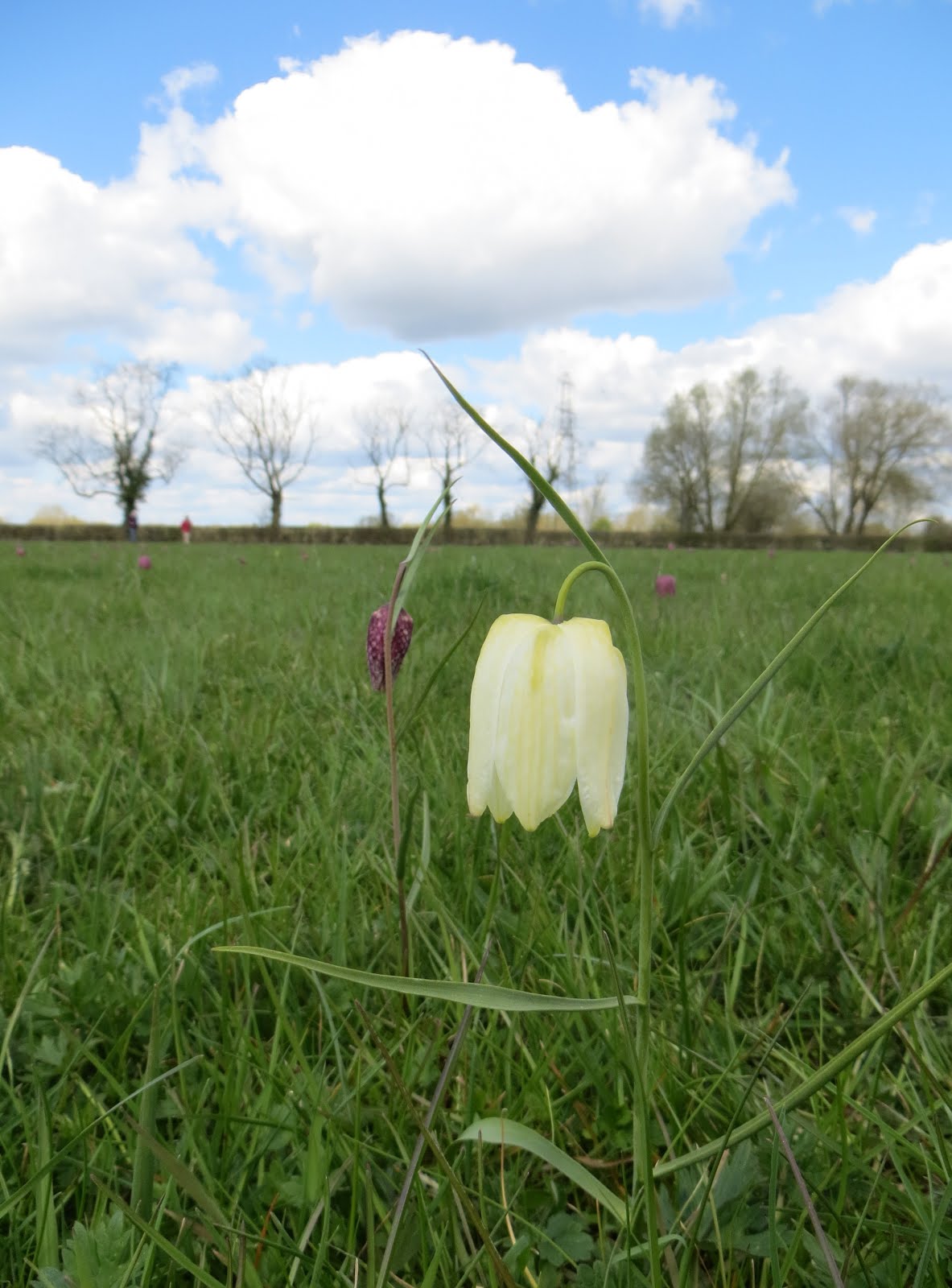
On one Sunday each year Ducklington Fritillary field is opened to members of the public in order to raise funds for the village church and give residents and visitors an opportunity to walk among these beautiful flowers.
The Snake's head Fritillary (Fritillaria meleagris) were once widespread on floodplain meadows but are now found at less than 30 sites in the UK. The site in Ducklington is around 7 hectares and a designated SSSI (Site of Special Scientific Interest).
On April 17th, hundreds of people took the opportunity to visit the field as well as joining in with the other activities on offer throughout the day, including Morris Dancing, children's activities and tours of the church bell tower.
There was also an opportunity to learn more about what makes this site and species so special - Edmund Strainge of Ducklington Parish Council and Emma Rothero of Floodplain Meadows Partnership talked to visitors about the history of the site and the Snake's head Fritillary.


Tuesday, 7 July 2015

Stanton Harcourt school pond

If you are a regular blog watcher you might remember how grim and unwelcoming the school pond looked earlier this year.
After great work from LWVP volunteer Chris Hughes and Rachel Hemmings the school's Class 2 teaching assistant, not to mention the diggers in the school Eco Club and after school group it is looking much more welcoming.


It is certainly very popular with smooth newts and the children couldn't fail to catch a newt in their nets today, ranging from  newly hatched ones, that look like tiny fish, to adults with orange bellies and a male with a crest down its back and tail.


The pond is also home to frogs hiding out in the rocks and stones in the newly constructed dam across the middle of the pond and a toad was visiting last week. This project has generated a great deal of interest and satisfaction, particularly for the children involved in the work on the pond. Thanks to Rachel and colleagues they have also created a vibrant wildlife garden around the pond with a bug hotel made from pallets, a blue garden, a living willow structure and lots of other wildlife friendly features that were buzzing with bees, hoverflies and a myriad other insects today.

Tuesday, 30 June 2015

How now red cows

Right from the beginning it has been the intention to establish some sort of grazing at Rushy Common Nature Reserve and thanks to grazier Andy Colinswood this is now happening. The purpose is to improve the management of Rushy Common in the most effective and natural way posssible.

The cattle, 15 cows and 14 sucklers, arrived on 22nd June and quickly settled in. The impact of this number and the duration of time on site will be carefully monitored to see if these numbers are about right. The herd will be visited regularly by the grazier and a couple of volunteer stock watchers to check on their wellbeing and to make sure that the site remains stockproof. Notices have been put up with the phone number of the grazier in case of any problems observed by members of the public.

The cattle will be on site for the summer and early autumn. They are then housed indoors over the winter. They will eat longer grasses, push their way through scrub and trample the lake and pond edges which will help to increase the range of habitats on the reserve. Trampling by the hooves of cattle can create little pockets of bare earth that enable some of the less vigorous plants to get established.

.
Beautiful red colouring
Enjoying the long grass

The Red Poll breed was created by crossing Norfolk cattle, kept for excellent beef production with Sussex, which were predominantly kept for their dairy qualities. The Red Poll Cattle Society was formed in 1888 and the colour of the breed was by then established as red, preferably deep red, with white touches only on the tail switch and udder.
With its long traditions of both dairy and beef qualities, the Red Poll is therefore one of the original native dual-purpose breeds. In the first half of the last century it was one of the dominant breeds in English dairy farming, and has maintained the dual-purpose characteristics which now give the Red Poll such a valuable niche role in quality beef production.


Thursday, 4 June 2015

Great chicks spot

Chris found the great spot chicks in the hole in the ash tree.


I found the two lapwing chicks on the island at Standlake Common, Pit 60. But he needs a bigger lens.
 
Next week I am hoping for gannets galore, puffins, cetaceans and maybe a golden eagle as I sail from Oban to Aberdeen on the tall ship Oosterschelde.

Friday, 29 May 2015

Another brilliant day at Tar Lakes

More than 50 children (I lost count) and their parents and grandparents had a great afternoon at Tar Lakes and Rushy Common. Luckily there was room for all and plenty of snails, beetles and toad tadpoles just waiting to be fished up for inspection. Lilly and Thomas were particularly proud of the pike they caught.


It is a great joy to see young children delighting in the outside world and one Mum said, "Thank you so much you have got us started. We are going to get the kit tomorrow and I have got to make my son some charts to record what we find".
 
Sky and Esmee's Mum said, "When you have got this muddy you know you have had a great day out".

Jude from BBOWT brought her amazing tabletop river along and it proved to be a great hit with the budding engineers as they continually redesigned the course of the river, making ponds, lakes, dams and wells.


Thanks to Angus for his great enthusiasm for mayflies and all things watery as usual
 

 and to Clackers for manning the bird hide all afternoon.